Friday, August 5, 2011

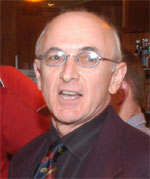
Thoughts on the David Norris Tragedy


There are so many facets to the story of David Norris’s failed presidential bid, so many issues involved that need to be teased out, that there must be some take-away lessons from it all. How we view it says a lot about our attitudes to politics, to sex, to our ethics and sense of right and wrong. I want to try to make sense of it all, because it seems to me that Ireland has lost a good president.

Even many of those who believe it was right for Norris to leave the campaign concede he would have been good in the job. So why, then, have we forced out someone like that out of the race? The whole thing leaves everyone feeling a little worse off.

I don’t like conspiracy theories. I don’t buy that he was driven out because of his sexuality, though of course it played its part. Was there an orchestrated campaign against him? Of course! But that’s called politics. That’s what you do in an election – you orchestrate a campaign against someone you don’t want to get elected. That’s not sinister, it’s the game.

What do we want from a president?

David Norris was by far the most popular candidate for president – that much is clear from successive opinion polls, even those taken after the original controversy surrounding his Magill interview. It’s not that we’ve all suddenly fallen for his west Brit charms after all these years. It’s because he was a perfect fit for what most people want in a president.

It seems to me all we want from the president – which after all is a “largely ceremonial” role as people keep saying – are a few simple things.

They need to look presidential. (I’m sorry, but for me Gay Mitchell or Sean Gallagher just don’t fit the bill.)

They need to sound presidential – someone articulate that can make wishy-washy non-political statements sound profound and important, and who we feel won’t let us down when speaking in public.

They need to have made some contribution of significance to Irish life and society over the years – we need to feel that they deserve the reward of the Aras. (Again, sorry Gay and Sean!)

And most importantly, and this is why I believe Norris was such a front runner, we want their election to say something about us as a nation.

Mary Robinson’s election showed we were ready to have a first female president. Norris’s election would have shown that we were ready to have a gay president.

A gay president

I think that, far from his sexuality being a negative for him, it was actually the biggest positive for him. We wanted to be able to say to the world – look at us, we in Ireland are now a grown up liberal social democracy capable of electing the first gay president anywhere in the world. He was popular because he represented the image of the country that a large portion of the population wanted to portray.  
Norris himself campaigned that he “did not want to be a gay president, but a president who happened to be gay”. But the reality was, the only reason he was so far ahead in the polls is that Ireland didn’t just want a president who happened to be gay, we wanted a gay president. Because it said something about us. For all his human rights work, and all his scholarly Joycean work, for most people in Ireland the name David Norris means just one thing – gay rights. We weren’t just ready for a gay president, we wanted one.

The thorny issue of pederasty

Because David Norris equals gay in Irish shorthand, his opinions on sexuality became a focus point for the media. It happens to all candidates. If Mary Davis is being interviewed, she’ll be asked about the Special Olympics, not for her views on pederasty. If Gay Mitchell is being interviewed, it will probably be our role in Europe – he’s been an MEP for a long time, hasn’t he? Sean Gallagher, your thoughts on entrepreneurship please.

But luckily for the other candidates Europe, the Special Olympics and business are not as emotive and personal an issue as sexuality. The very idea that we would even ask Mary Robinson or Patrick Hillary for their nuanced opinions on teenagers having sex would be ludicrous. But it’s an issue that Norris had to deal with because his defining public role has been steering a catholic dominated country to a more gay-friendly equal society.  

So I’m sorry David, but we must ask you – how young is too young? Mary Davis, what is your favourite Special Olympic sport? Davd, do you like having sex with younger men? Michael D, a word on how important the Arts are in Irish society? David, will you be having sex with another man while in the Aras?

Ezra Nawi

Here comes the tricky part to discuss. The statutory rape of a 15 year old Palestinian boy by Norris’s former lover Ezra Nawi.

In a strange way, it was useful for Ireland to have had the discussion earlier in the year about Norris’s Magill interview, because it laid down an important distinction – that between paedophile and pederast.  A paedophile has sex with children, a pederast has sex with post-puberty teenage boys.  Neither is acceptable in my opinion for a man in his forties or fifties, but can we at least talk about this for a minute without descending into moral outrage.

The teenager, in any of the following European countries, would be over the age of consent:

Albania (14), Austria (14), Bosnia (14), Bulgaria (14), Croatia (14), Czech Republic (15), Denmark (15), Faroe Islands (15), Estonia (14), France (15), Germany (14), Greece (15), Iceland (15), Italy (14), Liechtenstein (14), Macedonia (14), Monetnegro (14), Poland (15), Portugal (14), Romania (15), Serbia  (14), San Marino (14), Slovakia (15), Slovenia (15), Spain (13), Sweden (15)

That means, if as the Israeli court accepted the relationship between the teenager and Nawi was consensual, no court case would have arisen in any of these countries and Norris’s letter would never have been written.

Now of course, the law of each country needs to be respected – but I think it’s a point worth making. And its important to make it because tabloid headlines describing Nawi as a paedophile, or commentary comparing his actions to those of paedophile priests are just dishonest.

It’s not unheard of in the straight world for teenagers to have sex with older men or women (when it’s a woman we call her a cougar!).

Now, personally, I don’t think it’s right for an older man to be with a teenager, but I’d have a bigger problem with Norris defending Cathal O’Searcaigh, who was an obvious sex tourist.

The letter

Was Norris right to pen the infamous letter seeking clemency for Nawi? No, he wasn’t.

But I think it’s perfectly understandable that he did.  If the love of your life was heading for prison, and you thought you could make a difference by writing a letter, who wouldn’t? The words used, and the fact that Norris was making himself sound as important as possible, don’t matter. He was making the letter sound as strong as possible.

I don’t think any politician should be writing these kinds of letters to judges in any jurisdiction. Norris was wrong to do it. And it cost him his presidential bid.

But should it have? Was the crime big enough to match the punishment? And has our moralizing cost us one of the best presidents we could have had?

Have we ever asked any other candidate in any other election to reveal what letters they had written to seek clemency for criminals? This is a new standard we are setting now.

Gay Mitchell, it appears, wrote to a Florida judge, seeking clemency for a man who shot dead two people at an abortion clinic, and was facing the death penalty.

Did I miss something here?

Since when is a Double Murder a less heinous crime than pederasty?

If Norris is forced out of the race for his letter, on behalf of the love of his life, why is Gay Mitchell still in the race, given his letter on behalf of complete stranger who is a killer?

Media bias

Finally, there is now an attempt by some conservative/right commentators like John Waters, David Quinn or Kevin Meyers to say that the media went easy on Norris. That because of a “liberal” bias, the media looked the other way to Norris’s comments. They argue this would not have been the case if it was a priest that had said it.

I’ve already pointed out how the comparison to clergy is wrong. I think it’s also wrong to claim the media somehow went easy on Norris. There was a very tough series of interviews with Norris when the Magill controversy blew up – including the memorable one with Aine Lawlor on Morning Ireland. And once the letter emerged, the media were all over the story like a rash.  The very media that these commentators claim is going soft on Norris, were the ones that kept the controversy so heated that Norris’s supporters found the going too hot and pulled out.

It’s a favourite new argument of right wing commentators that somehow they are victims of a liberal conspiracy. The fact is that it is often liberals who are weak at standing up for their viewpoints. Because a liberal viewpoint by its very nature is open to other ideas, and a conservative viewpoint is usually married to some dogma. Liberals want to hear all sides of the argument including the conservative ones. Conservatives never accept they are wrong. You see it in the States all the time, where Fox or Tea Party supporters claim the media has a left-wing liberal bias, where in fact it’s their viewpoint that is one-sided. I hope the liberal forces in Ireland will keep their strength.

Aftermath

After the dust settles on the whole controversy, I think we’ll all feel a little worse about the situation.

There was no big homophobic conspiracy. There was no grand Israeli plan to knock him out of the election.  There was simply a storm that brewed from a society that still finds it difficult to discuss teenage sexuality, and a political habit of trying to wield influence over things that maybe they shouldn’t.


 If we step back from it, do we really think that Norris is not acceptable as president because of that letter? It’s a hard one. I didn’t realize how much I wanted him to be president until he was no longer in the race. How boring it all looks now. I’m hoping some new candidate will come along that can inspire us, who would represent us well, who has contributed to Irish life and society, and whose election says something about us as a country.

Of course, they will still need to get the support of county councils or 20 TDs… don’t get me started on that whole side of things…

Thursday, July 28, 2011

Storm Brewing over Ground Zero Cross


You can hear a piece I did for RTE Radio on the lawsuit filed by American Atheists over the inclusion of rubble in the shape of a Christian Cross in the 9/11 Memorial Museum.

There is also an update on latest in the DSK sex assault case.


http://www.rte.ie/news/2011/0728/morningireland.html

Tuesday, July 26, 2011

Jim O'Malley: An Irish connection to an extraordinary story

Well-known New York immigration lawyer Jim O’Malley tells Vincent Murphy about his part in the extraordinary story of Deo, a student who escapes genocide in Burundi, only to return years later on a mission to help his people.


The airport policemen wanted to see Deo’s passport and visa and ticket. Deo wanted to know where he should go to pick up his bag.
The policemen looked surprised. One of them asked another question. The woman translates for Deo, “The man asks, ‘Do you know where you are?’”
“Yes,” said Deo, who speaks only French. “New York City.”
She broke into a smile, and translated this for the uniformed men. They looked at each other and laughed, and the woman explained to Deo that he was in a country called Ireland, in a place called Shannon Airport.

-          excerpt from Strength in What Remains by Tracey Kidder (2009): Random House

When a young homeless African man walked into Jim O’Malley’s lower Manhattan office in 1995, the Limerick-born immigration lawyer had no idea of the remarkable tale he was about become a character in.
The young man’s name was Deogratias (which translates to “Thanks to God”), and he was brought to the office, by Siobhan McKenna, a friend of O’Malley’s who was a caretaker at a Catholic church in midtown Manhattan.
“He spoke no English, he only spoke French, the colonial language of Burundi,” recalls O’Malley, “She translated his story, and I’d never heard anything like it.
“Actually, I had never heard of the country Burundi in my life. I was aware that genocide had occurred in Rwanda, the neighboring country.
“I just knew what I read in the papers and had seen on TV, but I’d no idea of the dimension from a very personal viewpoint - a person whose family members had been through this, and who had been through it himself.
“It was quite a harrowing story to say the least.”
Deo’s extraordinary story is the subject of the New York Times bestseller Strength in What Remains by the Pullitzer-Prize winning author Tracy Kidder.

Deo
In 1994, when Burundi and Rwanda were exploding in civil war, in which Hutus and Tutsis were slaughtering one another, Deo, a Tutsi, was helped to flee the country.
After several flights, including stopovers in Cairo and Moscow, the young man with no English landed in what he thought was New York, but was actually Shannon Airport in County Clare.
“He thought he was in New York, and got off the plane and asked someone in the duty free shop, how he could get a taxi to Manhattan,” says O’Malley, who ironically grew up in Limerick city just a short journey from Shannon Airport. “To this day we have a good laugh about that. They said: No, you have a few more hours to go yet.”
After arriving in New York with little more than $200 and no English, Deo scraped by. For a period, he lived homeless in Central Park. At another stage, he shared a run-down tenement in Harlem.  For work, he delivered groceries from Gristedes supermarket for $15 a day. It was on one of these supermarket deliveries that Deo met Siobhan McKenna – who spoke French – and once she heard his harrowing tale, she took him to O’Malley’s office to see if he could apply for asylum. The process was complicated, but eventually after going to court, Deo was granted political asylum.
And while this was all happening, Deo’s life was taking another extraordinary turn.  Having heard about his living arrangements, a married couple living in Lower Manhattan, Charlie and Nancy Wolf, who were friends with both McKenna and O’Malley, took the young African student under their wing. They offered him accommodation, and in a remarkable display of generosity arranged for him to go to Colombia University and even paid his tuition. 
“They’re amazing people,” says O’Malley, “He started to live with them here in Manhattan, and they helped him enormously. They helped him go through school, and he enrolled in Columbia University. By this time, which was some months later, I had formally requested political asylum on his behalf, and got him some ID and got him some quasi-legal status while his application was going through the system.”
“He started in Columbia, and was a very bright student. He had been a medical student in Burundi, and did very well in Columbia." After Colombia, Deo went to the Harvard School of Public Health, where he volunteered with Dr Paul Farmer to go to Haiti to study malaria and drug-resistant TB.
Meanwhile, O’Malley was working on translating his asylum status into a green card, and later worked on his successful application for US citizenship.
“We became friends,” says O’Malley, “He has become part of our group of friends and his friends have become our friends.”
At some point, Deo travelled back to Burundi for several weeks, where the violence had died down and a process of reconciliation was underway. But he was appalled by the state of health care there, and vowed on his return to New York to do something about it.
Jim O'Malley
“He described “hospitals” where patients were actually being held captive because they couldn’t pay their bills, so they weren’t released,” recalls O’Malley. “People who had died, their corpses were being held because their family owed money to the hospital. It’s an extremely poor country.”

Deo organized a fundraiser, where he took in  several hundred dollars. Jim O’Malley says he thought that Deo would simply send the money raised – the equivalent of maybe a year’s income in local currency – to Burundi. But the medical student had other ideas. “He said, ‘No, I want to use this now as a springboard. I want to build a hospital’ and we thought: Wow - that’s ambitious!” says O’Malley.

Deo started a charity called Village Health Works to raise enough money to build the hospital mostly with local labor in Burundi. He took a year out of medical school and went back to Burundi, where he lived in a tent while the medical center was being built. The resulting facility is a state-of-the-art hospital, with in- and out-patient services, a unit for malnourished infants, and a community centre. There’s even a model farm, where locals are taught how to grow crops.

“People travel on foot for two to three days, from Tanzania, the Congo, Burundi, and Rwanda to get there,” explains O’Malley, “Witch doctors are the only competition. They refer to the hospital as America, it’s really a remarkable place.”

The charity Village Works is now a fully-fledged organization that is completely self-sufficient. All money it raises goes directly to the running and development of the hospital. Plans are currently afoot to build a new wing with a maternity unit.        

In December 2009, Jim O’Malley and his wife travelled to Burundi, with Deo and the couple who had “adopted” him, to see the hospital built in the mountainous area where Deo had lived before his exile. “When I arrived and saw it, I don’t think I’d ever seen a place as green in my life,” he said, “It’s absolutely beautiful and extremely fertile. The poverty is astounding, but at the same time the dignity of the people is equally astounding. The beauty of the country is spectacular. The population is very dense. Probably it’s the size of Ireland or smaller but it has 8 or 10 million people. Everyone walks everywhere, there are not a lot of automobiles. A bicycle is a big deal to have in a household.”

Deo wanted to show them the hospital, but on a personal level, he also wanted to introduce his four American friends to his mother and brothers who were still living there. “It was an extraordinary experience for me, personally and professionally.  I don’t think I’ve ever experienced anything like it,” says O’Malley.

For a man who has clients from over 70 different countries, here is one that will always hold a special place in his heart.

Read Deo’s full extraordinary story in Strength in What Remains by Tracy Kidder, published by Random House (2009) and available in all good bookstores.

Follow the hospital’s progress or donate to Deo’s charity at www.villagehealthworks.com

Find out more about Jim O’Malley at www.omalleyimmigrationlaw.com

A version of this article appears in the summer edition of Irish Connections magazine

Wednesday, July 6, 2011

EXCLUSIVE: SPEAKER CHRISTINE QUINN INTERVIEW

Speaker of the New York City Council Christine Quinn talks to Vincent Murphy about her Irish roots, her plans for marriage and whether or not she’ll be NYC’s next mayor.


On the window of her office across the street from City Hall, Christine Quinn has a copy of Ireland’s 1916 Proclamation of Independence. But it’s no valuable historical relic.

“That copy of the Proclamation actually came in a Clancy Brothers album,” she explains – you bought the record, and the proclamation was a freebie. How Irish.

“That used to hang in the kitchen in Glen Cove (where she grew up), my mother had it framed.”

Around the office are several other indicators that with Quinn, her Irish heritage is something she wears on her sleeve. Tiny figureen leprechauns dance in a circle on her mantelpiece, on the wall are photos of the City Council Speaker with Irish actor Liam Neeson in one, and Bono in another.

All four of Quinn’s grandparents were born in Ireland – three in Co Cork and one in Co Clare. “I’m 100% Irish,” she says, “Most people in the United States nowadays aren’t 100 per cent anything – which is neither good nor bad - but it makes that country very central in your household.” Her father, Larry, lived in Schull in west Cork for a time as a boy. He went to school there and made his First Communion there.

“My father once said we were so Irish we didn’t have to try to be Irish,” she smiles, “He always kinda resented those who had to try and put on airs about being Irish.” 

Her maternal grandmother, Nelly Callaghan, or Nelly Shine as she was before she married, came to the United States from Cork on the Titanic. She was one of the few female passengers on steerage to survive when the ‘indestructible” liner met its match in an iceberg in 1912. Her survival is now the stuff of legend, her grand-daughter explains. “She was quoted in a book on the Titanic as having said: ‘When the other girls dropped to their knees to pray, I took a run for it’.

From her desk, Quinn retrieves an envelope holder, which has a story cut-out from the New York Times stuck to its side. It tells of her grandmother and grandfather when they went returned to Ireland for the first time decades later. “Being a good immigrant they didn’t frame it of course, they stuck it here on this envelope holder,” she laughs, “Another copy went on a waste paper basket which my sister has.”

Christine’s parents lived in Inwood after they were married, but moved to Long Island in 1958, two years after Christine’s older sister was born. Christine was born in 1966 in Glen Cove – a diverse community that included, among others, large Italian, Irish and Polish communities. “There were three churches: St Patrick’s, St Hyacinth and St Rocco’s,” she recalls. “We went to St Patrick’s. Occasionally, my mother would go to St Rocco’s which would cause an enormous fight on Saturday night. My father referred to St Patrick’s as the one true church of God,” she laughs.

Christine’s upbringing was strictly Catholic. She went to St Patrick’s elementary school and Holy Cross High School. “I once asked my mother if I could go to Public School and she said No, and I said why? and she said ‘Because that’s the rule!’
 “I didn’t come out until I was about 25, which is not that early in one’s life.”
With religion playing such an important role in her family, it’s not surprising that dealing with her sexuality was a difficult experience.  “I think that was part of what contributed to me taking a much longer time than it takes some people to realize the truth of their sexual orientation,” she says. “I didn’t come out until I was about 25, which is not that early in one’s life.”

Christine had lost her mother to breast cancer when she was 16, so it was all the more difficult to breach the subject with her father. When she finally told him she was a lesbian, it brought major tensions. “When I told my father he said, ‘I never want to hear you say that again’.  And I said, ‘Look, I’ve done what I have to do, I’ve told you, what you do with it is up to you’. Then there was some period of time where we didn’t see each other and didn’t talk.”

This distance was particularly strange for both of them, as her father was the kind that turned up at every baseball game, every softball game, every science fair. Eventually, the love between a father and daughter won through, and his attitude evolved over time and got better. Now her father is one of her closest advisers and biggest supporters.

In his 80s, he’s still a key part of her political team and those tough times seem a distant memory. “Now, he marches in the Pride parade and uses ‘we’ sometimes when he’s talking about the LGBT community,” she smiles. “We made him join the Gay and Lesbian Independent Democrats. He jokes when he’s at the GLID meetings that it stands for the Gaelic League of Independent Democrats.”

It’s been an eventful few weeks for Quinn. On the Friday before we meet, she secured a deal on New York City’s budget on time – one that despite the financial difficulties included no tax increases, no threatened teacher lay-offs and no fire house closures. But even as she held the press conference to announce the success, news was coming from Albany that would bring an even bigger smile. The State Senate had passed a bill legalizing gay marriage – an issue on which she had been a leading campaigner for years.

“It was remarkable. The disappointment in 2009 was significant, when it didn’t pass. So to have it come completely full circle in a relatively quick amount of time is just amazing,” she says. “And it really happened in somewhat of an Irish way because people never lost faith, they never gave up hope, they kept working and working in a political sense and changed the landscape and changed the number of votes.”

Marriage Equality is not just a political issue for Quinn – it’s also personal. She plans to marry her partner, lawyer Kim Catullo in Spring 2012. “It’ll be a party, a celebration,” she says, although exact plans have not yet been made. “It was funny. Someone said to me: Congratulations on your engagement, and I was like… What?” she says, pointing out that they’d talked about marriage for years, it was not something that they just decided after the law was changed. “You know, we’ll be together 10 years in September. So it had passed the point of having a romantic moment with someone down on one knee, or you know a ring stuck in the middle of a chocolate mousse or something. It was just, when this happens, we’ll do it, was the operating assumption. I respect people who go to other jurisdictions and do it, but we didn’t want to do it anywhere but our home town.”
"What is more to the core of a celebration of Irish heritage than the struggle to get to be who you are, and to be free in who you are?"
Another long-running bone of contention for Christine Quinn is the continuing exclusion of the Lesbian, Gay, Bisexual and Transgender (LGBT) community from New Yorks’ St Patrick’s Day Parade. Is she tired talking about it? “If one can be tired of not marching, I’m tired of not marching” she says. With marriage equality now a reality, and with changes expected next year on the Parade’s organizing committee, she has renewed hope that the long running controversy can be sorted out.

“I’ve always had hope and real belief that the parade will change, sooner rather than later. But after Friday (when the marriage equality bill was passed), how could you not believe that?” she says. “Having such a diverse group of Senators vote for the Bill will help move all things that are stuck as it relates to discrimination or misunderstanding or bigotry. I think this will help, not just for LGBT people, but for all kinds of people, this law will help to dislodge those logjams. And certainly the parade is a logjam.”

I suggest to her that most people in Ireland don’t understand it, and that St Patrick’s Day has long since become a day that celebrates Irish-ness, not just Irish Catholicism. “Right,” she says, “I think most folks don’t see it that way anymore. It’s a celebration of Irish heritage. What is more to the core of a celebration of Irish heritage than the struggle to get to be who you are, and to be free in who you are? And to get to celebrate who you are in a way you want to and you believe God wants you to and expects you to? I mean, that is at the core of what hundreds and hundreds of years of struggle have been about, and unfortunately too many people to count have lost their lives for it. So to have something that is in name about Irish-ness, and say some Irish people are better than other Irish people, is just not at its core, what I believe being Irish is about”.

Quinn, despite her clear passion for Ireland, never got the chance to visit the Emerald Isle until relatively recently. Her first trip to Ireland was in 2003, but she has been back several times in more recent years, including with her father to west Cork, and Schull, the town he used to live in. “He always said it was the most beautiful place in the world but I was skeptical,” she says. “Now look, he and his brother talked about the tenement they lived in on 96th and 1st like it was the Taj Mahal! But Schull was just gorgeous. Beautiful.”
“Well who wouldn’t want to be the mayor of the city of New York?” 
Since becoming the first female speaker of the City Council in January 2006, Quinn has established herself as one of the most powerful figures in New York politics. She was elected as speaker for a second term in January 2010. And now most observers say she’s well placed to take over the “other” office in City Hall, once Michael Bloomberg vacates it in 2013, especially after the implosion of Anthony Weiner’s political career. 

“Well who wouldn’t want to be the mayor of the city of New York?” she says. “Some people say it’s the best job in the world. Some say it’s the second best job, after the president of the United States. Either way, it’s an amazing position. And I love this city. I’ve been honored and really, really lucky to get to serve it. And I hope that I find ways to continue to be able to serve it.”  But for now, she says she’s focused on her job as speaker, and on helping President Obama getting re-elected.

As speaker, her priority for the next 12 months is to keep the budget balanced, and help stimulate job growth. “We’ve done a lot of that in the past 12 months,” she says pointing to programs aimed at helping small businesses, and in the area of food and technology that the Council has introduced in the past year. She also points to having addressed some of the housing problems in city, from creating new affordable housing to dealing with buildings left run-down because of the economic and real estate crash.

Quinn with (R to L) author Colum McCann,  former Arts Minister Mary Hanafin, actor Gabriel Byrne, and Culture Ireland director Eugene Downes at the launch of Imagine Ireland in January 2011
Alongside all of this, Christine Quinn has been a major supporter of the Irish and Irish-American causes, whether supporting arts and culture, or economic efforts or local community projects. That’s why she’s being honored as Irish Examiner USA’s Woman of the Year at a reception in the Irish Consul’s residence this Thursday. 

“I feel very strong about my Irish heritage, so to get recognition from the Irish Examiner is very, very important to me,” she says, “I hope it’s a recognition of the degree to which I’ve tried to make the work I’ve done as an elected official very Irish work. By that I don’t mean work that has only helped Irish people. But I mean work that’s infused by hard work, and a sense of pride and sense of faith and sense of the importance of community, and communities being allowed to have the freedom to express themselves, and people having opportunity to work and be with their families and live the Irish-American dream, whether or not they are Irish-American”.

“You know, also being the first female Speaker of the City Council, I think any moment where you can have a Woman of the Year in any community is important. So I feel honored to be one.  Because I think even though its 2011 and women have risen to great heights, there are still challenges for women out there. So to have moments where we can remind young girls that they can be anything they want as long as they work hard and never give up is great.” 

This feature first appeared in Irish Examiner USA of July 5th 2011

Wednesday, June 29, 2011

Dublin Contemporary 2011 – A Terrible Beauty is Born

The biggest contemporary art exhibition ever held in Ireland takes place in Dublin later this year. It aims to put the Irish capital firmly on the map as an international center for the visual arts.

When you think of contemporary visual arts, Dublin is not a city that immediately comes to mind. But now an ambitious bid is being launched, supported by the Irish government, to change all that. The first Dublin Contemporary festival takes place for eight weeks during September and October this year, and will showcase Irish artists alongside some of the cream of talent from all five continents. But can Dublin Contemporary really make a mark, along the lines of the Venice Biennale?

“The ambition for it is to be a blockbuster exhibition – that’s the kind of budget we have, and that’s the kind of goal we have set out for ourselves,” says lead curator Christian Viveros-Faune. “And it is supposed to repeat, it’s a Quinquennial, which is it happens every five years,” The New York-based curator and writer was headhunted by organizers to take over the running of the festival, following the departure of the original artistic director Rachel Thomas at the start of this year.

Viveros-Faune is a former director of the prestigious Chicago Arts fair NEXT and VOLTA NY in New York, and has written for several prestigious art publications including Art in America, Art Review and The New Yorker. He insisted on having Jorge Castro as his co-curator, a Brussels-based Franco-Peruvian artist, curator and former UN and EU diplomat. Castro has curated exhibitions at the Venice Biennale, and major exhibitions in Spain. The pair took over the reins in February, just seven months before the massive project was due to open, and immediately changed the theme.

“I would have never considered taking the job to do somebody else’s show,” says Viveros-Faune, “That was really one of the stipulations that we wanted. We were never filling in. We were doing our own exhibition. Thankfully, the previous group had really not done a tremendous amount of work, and they really only had a couple of artists on board. So we almost had a blank slate to work with, which in this case turned out to be a blessing.”

The theme they chose Terrible Beauty—Art, Crisis, Change & The Office of Non‐Compliance, addressed the “elephant in the room”, he says. The title of the show is taken from the famous WB Yeats poem Easter 1916 in which he responded to the dramatic political developments of the time. It’s hoped Dublin Contemporary can also highlight art’s potential for commenting on current events in Irish life.  “I think any major cultural event in Ireland has to identify the overarching social, cultural and economic issue that not only the nation is facing, but the entire world is facing," says Viveros-Faune, “What we want to do is basically explore the connection between art and these kinds of crises - art and life in a certain sense.”

Although the final line-up of artists has yet to be confirmed, Viveros-Faune says there are several who are confirmed that have the potential to be really exciting. “Richard Mosse, for example, is an Irish artist that has been taking tremendous photographs in the Congo, at some significant personal risk, I should add. They are significantly more than just ordinary photographs. They are taken with an infra-red camera in the day, and they actually make the 20-year-old “generals” look almost feminized because they seem to be sporting pinkish or fuchsia uniforms. So that’s one example of terrific work.”

“There’s a collective called the Bruce High Quality Foundation, from America, and they are looking to investigate the connections between art and life. They are currently touring art schools here in the States – and essentially they want to kick-off their European tour in Dublin, hopefully Trinity College. And then, you know, Lisa Yuskavage is one of the biggest living painters in the world, she has a show at the RHA.”

Others artists confirmed include Nina Berman (USA), Tania Bruguera (CUB), Fernando Bryce (PER), Chen Chieh-Jen (TW),  James Coleman (IRL), Dexter Dalwood (GBR), Wang Du (CHN), Omer  Fast (ISR), Goldiechiari (ITA), Patrick Hamilton (CHI), Jim Lambie  (GBR), Brian O’Doherty (IRL), Niamh O’Malley (IRL), and Superflex (DEN).

The curators are hoping that the festival will viewed as a fresh new upstart on the contemporary arts circuit that is looking to be immediately relevant. They’ve promised that the art on view will bring in people who are not specialists in the visual arts and will be “very provocative”. Much of the art will be in on display at a cluster of buildings on Earlsfort Terrace, while others will use some of the well-established art institutions across the city. The festival is already leading to some interesting collaborations involving some of those institutions.

Meanwhile the city of Dublin itself will be used as a canvas, with street art inspiring and provoking public interest. Over and above the numbers attending, and the coverage Dublin Contemporary 2011 gets in the media, there is one other way that Viveros-Faune will be measuring its success. “That is the fact that we are putting on the biggest exhibition of contemporary art that Ireland has ever seen. And I think that in itself is going to raise the bar on efforts after 2011 and hopefully inspire some artists, and young potential commentators, and people who are not yet interested in the arts to possibly become more engaged. Those things are not so readily quantifiable immediately but they do have a lasting significance.”

Dublin Contemporary 2011 takes place Sept 6th – Oct 31st.

A version of this article appears in the summer edition of Irish Connections magazine

Tuesday, June 28, 2011

SELLING IRELAND TO AMERICANS

Meet the man whose job it is to sell Ireland as a vacation destination to North Americans - Joe Byrne, head of Tourism Ireland North America


“You can be a very busy fool when you have a job like mine in America,” says Joe Byrne, the Carlow man who heads up Tourism Ireland on this side of the Atlantic. “You can go after every target market and every city and all age groups and you can go after all interest levels and all hobbies.” But that would waste time and money, so Byrne and his colleagues, have done a lot of research to find out precisely who is most likely to actually travel to Ireland.  They call them their “Best Prospects”.

“First of all they are baby boomers, so people 45 years of age and upwards,” he explains, “That’s not to say we don’t have younger people who go to Ireland – we do. And that’s not to say we don’t bandwagon every now and then on an opportunity to go after them. But in terms of where we put our focus, it’s baby boomers. We’re talking sight-seekers and culture seekers. These are the things they are most interested in doing when they are going on vacation to anywhere. They are college-educated and above-average income, defined as $75,000+ which eliminates a lot. And they are actually clustered in 15 cities in the United States. So that allows us to focus on these. They are interested in the finer things of life, and they are past visitors to Europe. Then we have three niche markets that we focus on. The first is golf, the second is business tourism, and the third is the Irish, and Scots-Irish diaspora.”

All in all that leaves a target market of about 12.5 million Americans. These are the people who have expressed an interest in travelling to Ireland at some time in their life. And Joe’s job is to turn that “some time” into now. This job, you would think, has not been made any easier by the developments of the last few years. Ireland has been receiving all the wrong kind of attention because of the banking crisis and the EU-IMF bailout. Open The New York Times or Vanity Fair or whatever publication you choose, and all you’ll find are references to crippling debts, severe austerity measures and an angry population worried for their future. You might think that convincing people to spend thousands of dollars on a trip there just got a whole lot more difficult. But luckily, that’s not the case.

“We actually got a bit worried about it,” says Joe. So worried in fact, that Tourism Ireland commissioned research to find out how all this negative publicity was impacting on perceptions of Ireland as a world-class vacation destination. And it brought good news. 81% of people had been immune to the storm of negativity that we Irish have been so focused on. “They asked: ‘What publicity? What problems are you talking about?’, said Byrne, adding that even among those who were aware of it all, there was encouraging news. “We asked would this affect your intention of travelling to Ireland, and there was a resounding No.” It appears that Brand Ireland is too strong to be shaken by a financial crisis.

Even as the IMF officials crunch the numbers at Government Buildings in Dublin, the attractions that make Ireland great are still there outside those four walls. The spectacular countryside, the terrific golf courses, the rich cultural and artistic traditions remain. “I would have to say that Ireland does have an extraordinarily strong brand image in the United States. Other countries which are far bigger than Ireland do not have the same level of awareness as a vacation destination,” says Joe Byrne. “They don’t have the same emotional attachment that Ireland has for an awful lot of Americans.

So in a fiercely competitive marketplace, how does he make Ireland stand out? “There is what we say, and there is the way we say it. And the two are integrated,” he explains, “And the way we say it emphasizes the distinctiveness about Ireland. There are no countries in the world that are promoting themselves that don’t say that it’s a beautiful place. And we’re saying Ireland is a beautiful place. And there is no country in the world that’s promoting itself here that’s saying its people are not friendly! And we’re saying the Irish people are friendly. But there are very few that can claim what is distinctively, uniquely, culturally rich and worthwhile about Ireland. And it’s based around the fact that we don’t take ourselves too seriously. There’s this concept of ‘the craic’.  Of being interested and interesting and warm and welcoming and affording an opportunity to be more involved in an authentic experience. So it’s that tone of how we communicate that says an awful lot about what we are saying about the place as well.”

“It is built around the spectacular fantastically beautiful places for which we are known and loved, and the warm welcoming rich Irish people, but wrapped together in this unique distinctively Irish sense of fun and welcome and warmth and wit and mischief and roguery.”

Byrne says despite what many people think, the old leprechaun/blarney shtick doesn’t work anymore. “It doesn’t work in terms of persuading people to come to Ireland. It just doesn’t. And you would have to say there are probably a few nations involved: there’s Ireland, America and then there’s Irish America. One of the challenges that we have is that for Americans who are interested in coming to Ireland some time and should be interested, they get their impressions of Ireland from Irish-America rather than necessarily from Ireland itself. And a lot of that is what we call ‘paddy-whackery’ and not all of it is actually conducive to persuading someone who is interested or should be to actually go now. There is a certain stereotypical association which people believe is an association with Ireland, and a lot of it is to do with excessive drinking, and a lot to do with the paddywhackery that you see on St Patrick’s Day.”

Byrne says that while they bask in the limelight that St Patrick’s Day offers, they are keen to use the opportunity to display those aspects of the country which are strong enough to pull people to Ireland. “It’s the fact of Dublin being a city of literature, of Derry being the UK’s city of culture in 2013. It’s the spectacularly rich sporting and cultural events that take place. That’s actually what pulls people in.”

A trip to Ireland is a significant investment for any US holidaymaker – the average stay costs in the region of $5,000. And any difficulty in convincing people to travel over the past few years had less to do with Ireland’s economic problems, and more to do with the economic difficulties here in the States. But consumer confidence is now returning, and in a funny way Ireland’s problems, which have dramatically reduced hotel prices for example, can actually help convince people to go. “It means that now we have people who would traditionally have stayed in certain forms of accommodation who are now adding a night or two in a Castle hotel as well,” he said.

Another unexpected boost has come from President Obama’s decision to visit Ireland. “This an example of Ireland being in the spotlight through no credit of Tourism Ireland, but we can use the opportunity to focus on things that are grist to our mill, to highlight some aspects that we know our target market is interested in.” Obviously, one of those is the tracing of ancestry – an important motivating factor in the decision of many to travel to Ireland. “Irish ancestry is important, certainly. And there are forty million people with Irish ancestry in the States, give or take a couple of million,” says Byrne.

But perhaps surprisingly, only a third of American visitors to Ireland have Irish heritage, two thirds have no direct link, and Byrne says they are careful to remember this in their promotions. “In our marketing activities we want to be very careful that we don’t in any way send out a signal to people who don’t have Irish ancestry, that Ireland is a great location if you are Irish,” he says. “We want to send out a message that Ireland is a great vacation destination whether you are Irish, or whether you have different heritage. That does not stop us from sending out an over and above message to people of Irish ancestry, and we do that.”

For those of Irish descent who do go to Ireland, most are several generations removed. “They are not Irish born, only about 3% are Irish born, and only about 3% have actually a parent born in Ireland. So you are talking about grandparent or much further out than that. Therefore it’s a link, but it’s more notional.”

Byrne has been selling Ireland as a holiday destination for most of his adult life. A graduate of UCD, he worked briefly in RTE before taking those audio-visual skills to Bord Failte where he produced marketing videos. In the 1980s, the father-of-two was manager of Bord Failte’s  Paris operations, with responsibility for all of southern Europe. In the late 90s he came to New York as head of Bord Failte here. But he was soon called back to Dublin, as a new initiative to promote the entire island of Ireland as a tourism destination was being put together as the peace process began to bear fruit. Renamed Tourism Ireland, the North-South co-operation “took off from day one” and after five years working in Dublin, Byrne was once again appointed to head up the efforts in the USA and Canada.

Over the years, he’s witnessed many changes in the tourism industry. Major challenges have hit travel agents and tour operators as people began to book and research their own holidays using the internet. Nonetheless they both remain crucial allies of Tourism Ireland in influencing the choice of destinations for holidaymakers. “The first time the escorted bus tour market was written off was 30 years ago,” says Byrne, “And then 20 years ago it was written off again. I’m happy to say there will be more people on escorted bus tours to Ireland in 2011 than in any other year in the past. Escorted bus tours have moved with the times. The stereotypical image of the coach tour is just that – a stereotype. They are much more active and participant than they were in the past.”

Tourism Ireland has also moved with the times. Its Facebook page has 120,000 fans and DiscoverIreland.com is the most visited European tourist board website in the US. Social media now plays a crucial part in spreading the word about Ireland. Joe says the balance of power is very much with the customer now, and real life testimonies are crucial in promoting a destination. “If I say something, people will say: ‘sure that fella is paid to say Ireland is a great destination!’ But if a Joe Byrne who is not working with Tourism Ireland says ‘I went to Ireland and had a great vacation’, it’s treated with greater credibility than anything I would say.”

Fortunately, Joe need not worry too much. Most of the comments on Facebook about Ireland are incredibly complimentary. And research conducted by Tourism Ireland shows an incredibly high satisfaction rating among those who make the trip to Ireland. “I handle directly all of the complaints that come in here,” says Joe Byrne, “I read all of the letters. And nobody has written to me in the past two years! I keep on looking at the post and nobody writes. We have really great satisfaction levels. I say that not to just wallow in it, but to say we do have a world class product that meets and exceeds expectations. And it does mean that we have an army of satisfied visitors. A big part of our current strategy is to turn that army into a proactive army of ambassadors and evangelists who will spread the word about Irish tourism.”

A version of this article first appears in the summer edition of Irish Connections magazine